
Search Hawaii Bench Warrants
Hawaii bench warrants are court orders that let police arrest a named person and bring them before the judge. A judge signs one when someone skips a court date or breaks a court order. Start your bench warrants lookup with the statewide eCourt Kokua portal, then call the local police records unit to confirm. Urban Honolulu, Hilo, Kahului, and Lihue each have their own records desks. The tools below help you search Hawaii bench warrants by name, case number, or court location.
Hawaii Bench Warrants Overview
Where Hawaii Bench Warrants Are Kept
Bench warrants in Hawaii are entered into the Judiciary Information Management System, known as JIMS. The State Judiciary runs two portals that touch this data. The first is eCourt Kokua, which is open to the public around the clock. The second is the eBench Warrant system, which is locked to approved police, sheriffs, and court staff. When a judge signs a bench warrant, the record flows into both. The public side shows case status and docket entries for most traffic, criminal, and civil cases. The locked side shows live warrant detail for officers in the field.
Each of the four circuits holds its own paper files at the clerk's office. The First Circuit covers Oahu and sits at the Ronald T.Y. Moon Judiciary Complex at 777 Punchbowl Street in Honolulu. The Second Circuit covers Maui County from Hoapili Hale at 2145 Main Street in Wailuku. The Third Circuit handles Hawaii County out of Hale Kaulike at 777 Kilauea Avenue in Hilo. The Fifth Circuit serves Kauai at 3970 Kaana Street in Lihue. If eCourt Kokua is missing a document, the clerk at the issuing court can pull it for you.
A Hawaii bench warrant is a formal court paper. Under Hawaii Rules of Penal Procedure Rule 9, it must be signed by a judge, name the person or describe them, list the offense, state the date and court of issue, set a bail amount, and bar service between 10 p.m. and 7 a.m. on closed premises. The warrant stays live until police serve it or the court recalls it.
The Sheriff Division within the Hawaii Department of Law Enforcement serves warrants for all four circuits. You can read about the unit on the Sheriff Division page. The Sheriff Division also handles warrant service in Kalawao County, which has no police force of its own. The next section shows an image from the page.
The screenshot below comes straight from the State of Hawaii Sheriff Division home page linked above.
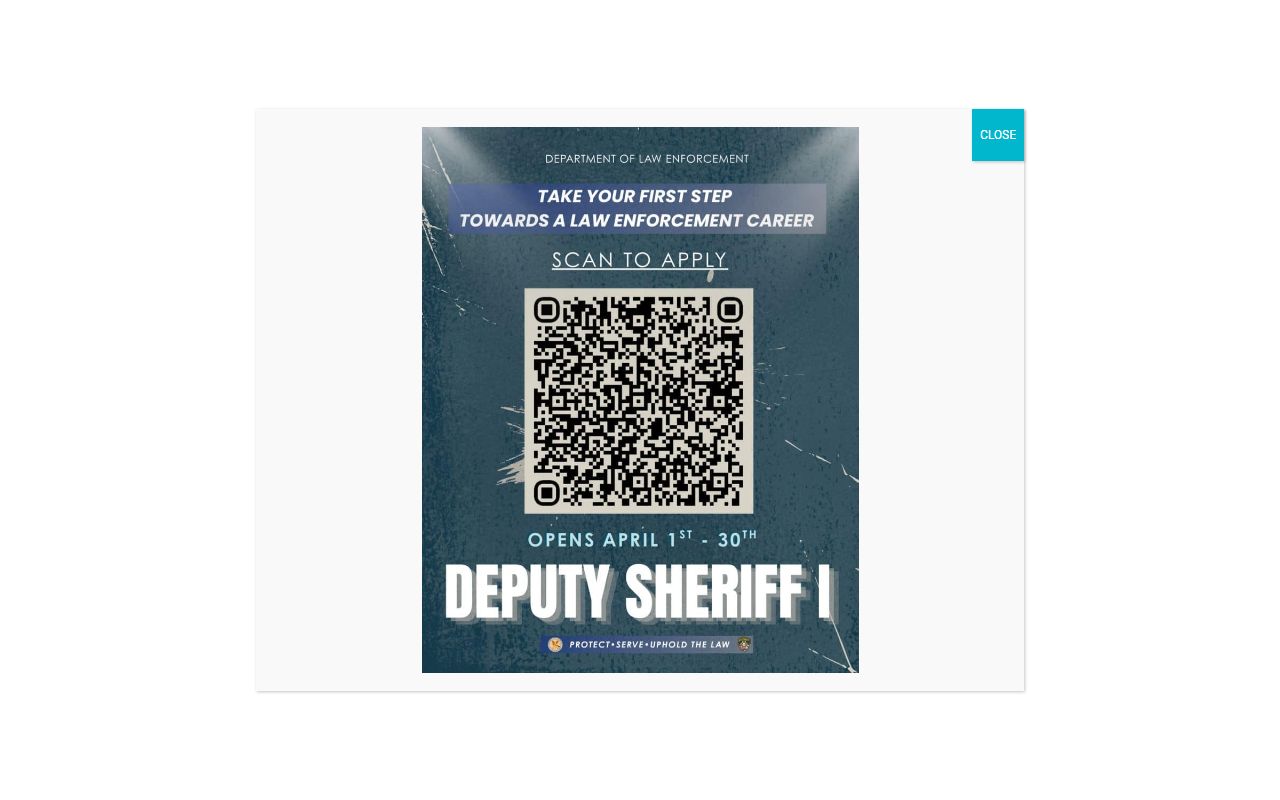
The page lists the mission of the Sheriff Division and the statewide role it plays in warrant service. It is a useful starting point when you need to confirm who will serve a Hawaii bench warrant.
Note: The eBench Warrant system login is only for approved law enforcement and criminal justice staff, not the public.
How to Search Hawaii Bench Warrants
Start your Hawaii bench warrants search online with eCourt Kokua. The portal shows upcoming court hearings, case dockets, and party data for traffic, district, circuit, and family criminal cases. Basic case info is free. If a PDF icon shows next to a docket line, you can buy and download the document for $3 for the first 30 pages, then 10 cents per page after that. Heavy users can subscribe for $125 a quarter or $500 a year for unlimited single downloads.
To start an eCourt Kokua search for bench warrants, you need:
- Full name of the person or a case ID number
- Court or location if you know it
- Rough date of the case or hearing
If you want to check future hearings, use the new hearing search tool. The Judiciary rolled it out in August 2023. The tool gives a two-week view of court hearings in all case types that are not confidential. You can read the Judiciary's announcement about this feature on the eCourt Kokua hearing search page.
The shot below comes from the Judiciary's news release announcing the hearing search.
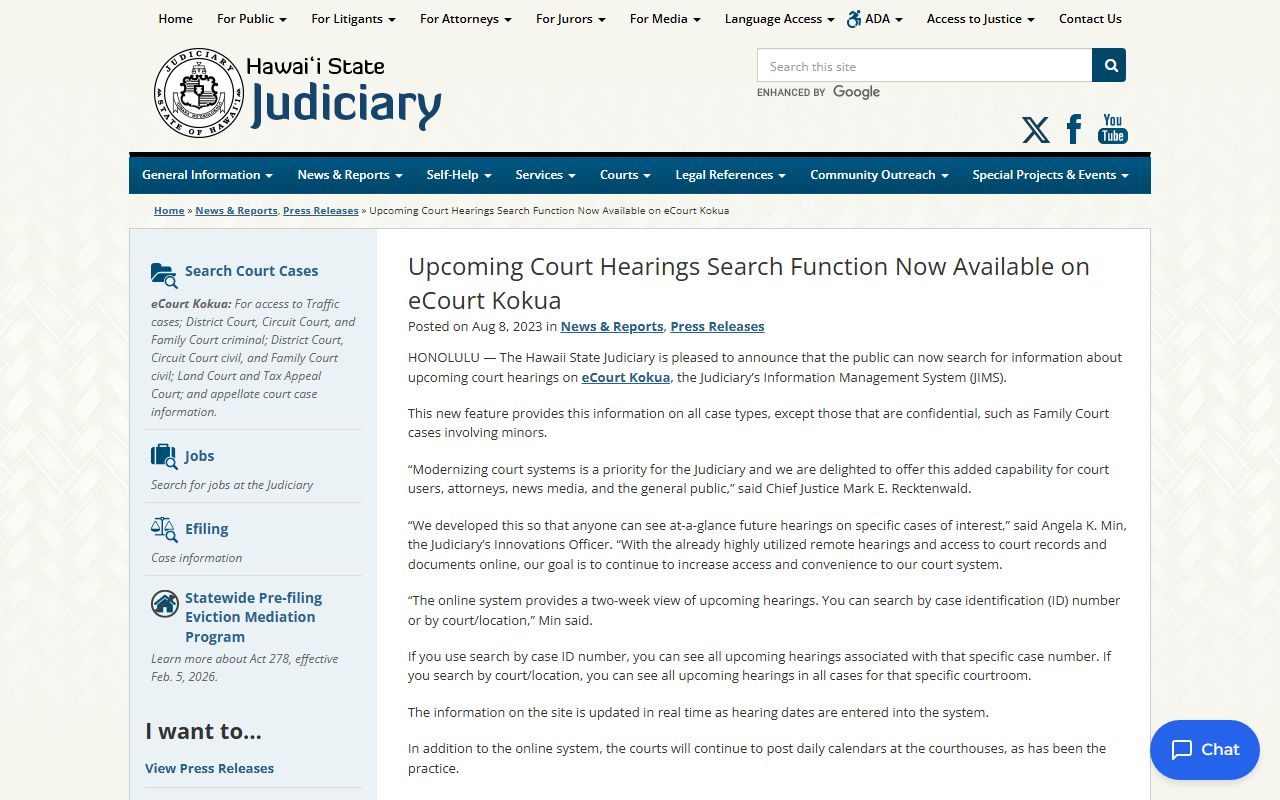
You can use this same tool to spot a missed court date that may have led to a bench warrant.
The eCourt Kokua landing page itself is at courts.state.hi.us. That page links out to the full case search and the hearing search. A screenshot from that page is shown below.
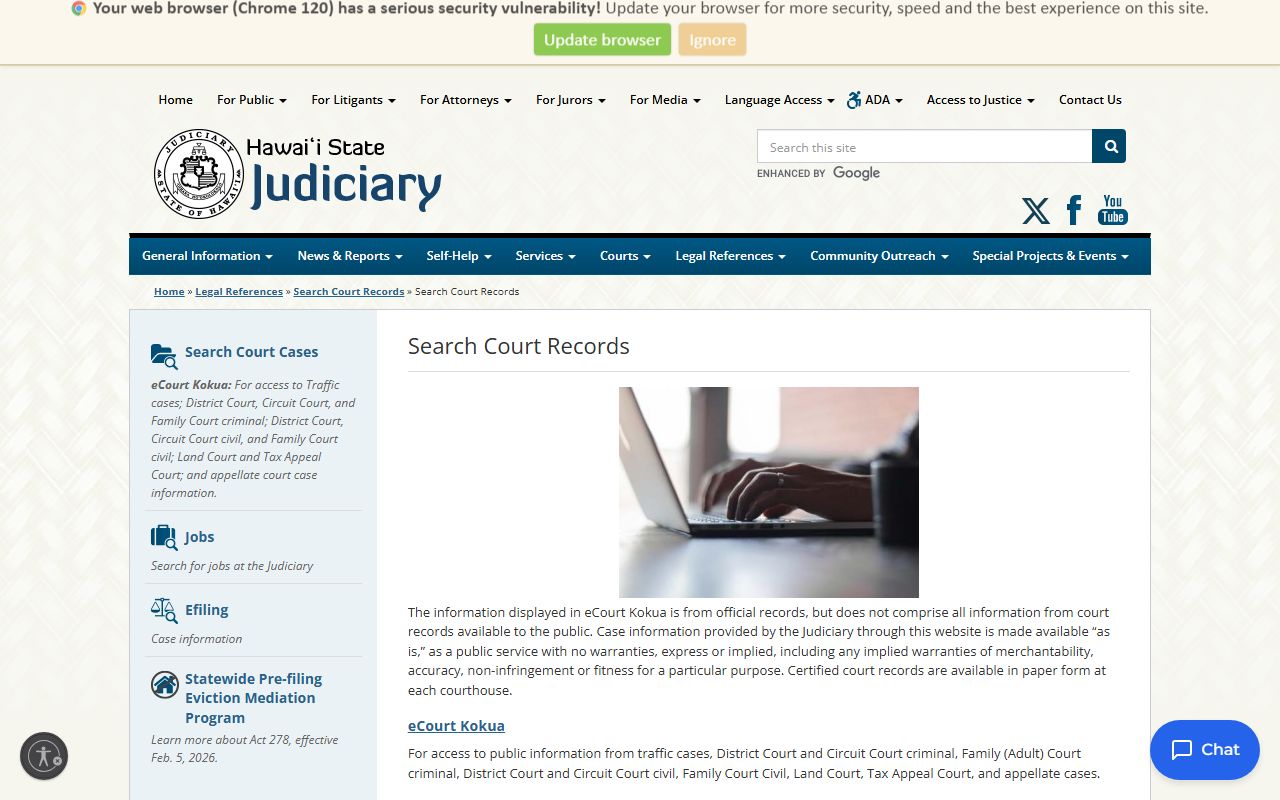
eCourt Kokua is the main free tool for anyone in Hawaii who needs to check bench warrants or case status online.
Types of Hawaii Bench Warrants
Hawaii courts issue several kinds of warrants. The Honolulu Police Department lists them in its HPD warrants policy. Bench warrants are one type. Arrest warrants based on probable cause are another. Search warrants, grand jury warrants, parole revocation warrants, Hope Probation warrants, juvenile warrants, traffic warrants, misdemeanor warrants, and felony warrants round out the list. A bench warrant is the court's response to a failure to appear or a broken court order.
HPD policy also flags a few special types. A First Circuit Court warrant is issued by an Oahu judge. An Outside Assist warrant is issued by a court on a neighbor island such as Maui, Hawaii, or Kauai. An NCIC warrant is entered by a police agency anywhere in the nation. An HIJIS warrant is the eBench warrant pushed out through the Hawaii Integrated Justice Information Sharing system. A Hawaii Paroling Authority warrant covers parolees. Each type has its own service rules, but the core idea is the same.
A Hawaii bench warrant record typically holds:
- Name and description of the named person
- Offense cited in the underlying case
- Date the warrant was signed
- Issuing court and judge
- Bail amount set by the judge
- Status: active, served, or recalled
The paper copy lives at the clerk's office. The digital copy lives in JIMS and flows to the eBench Warrant system for police use. Confidential cases, sealed cases, and juvenile cases are kept off the public side of eCourt Kokua.
Hawaii Laws on Bench Warrants
Bench warrants in Hawaii trace back to Hawaii Revised Statutes Title 38 Chapter 803. That chapter covers arrests and search warrants. HRS § 803-1 sets the baseline rule: no arrest without a warrant or other process from a magistrate, except as the law allows. HRS § 803-39 is the section that speaks to bench warrants, letting a court issue one when a person fails to appear or breaks a court order. HRS § 803-33 sets the probable cause rule. HRS § 803-35 limits search warrants to 10 days of life, though arrest and bench warrants do not have that cap.
The image below is from the Hawaii Revised Statutes index at capitol.hawaii.gov.
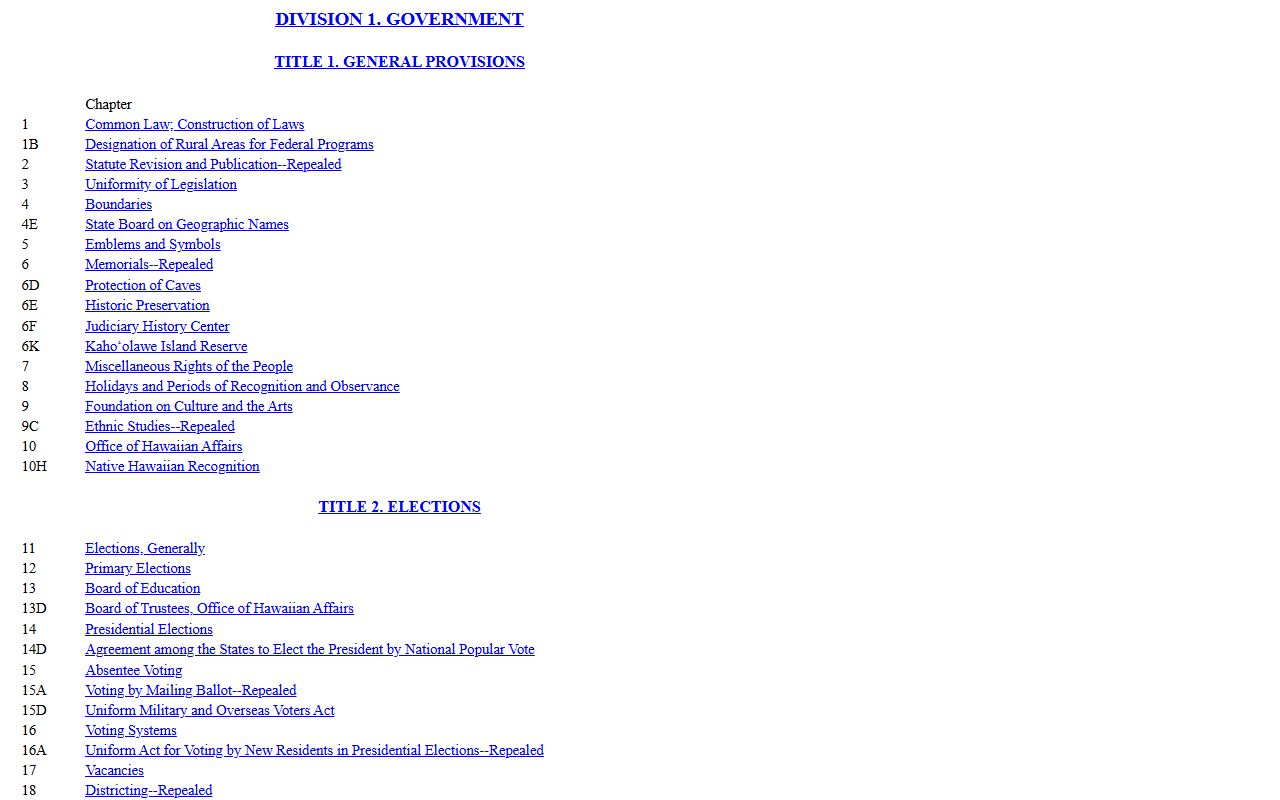
That page is the state's official source for the full HRS text. It is the best place to read the law in full.
The court's own rules add more detail. Hawaii Rules of Penal Procedure Rule 3 covers the application for an arrest warrant. Rule 9 covers the form and service of warrants. Rule 9 says a warrant must be signed by a judge, name or describe the defendant, list the offense, state the date and court of issue, order the arrest and court appearance, set a bail amount, and bar service between 10 p.m. and 7 a.m. on closed premises unless a judge writes an exception.
The screenshot below comes from the Hawaii Rules of Penal Procedure page on courts.state.hi.us.
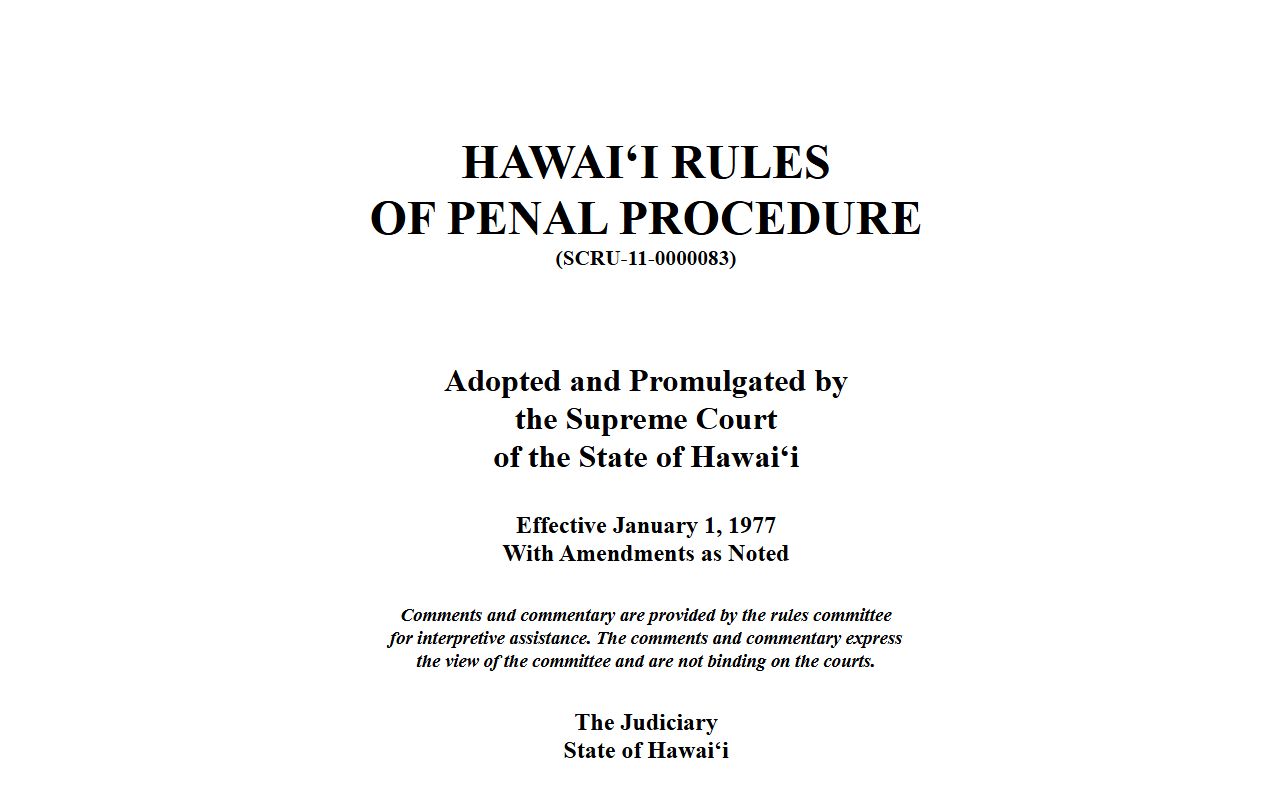
Rule 9 is the key rule to read if you want to know how a Hawaii bench warrant must look on its face.
Note: A bench warrant stays active until police serve it or the court recalls it. There is no built-in time limit under state law.
Hawaii Criminal History and Warrant Checks
The Hawaii Criminal Justice Data Center, also called HCJDC, runs the state's adult criminal history system. The center sits in the Department of the Attorney General. You can read about name and fingerprint checks on the HCJDC criminal history page. The check shows only adult conviction info. Pending cases and non-conviction arrests are not shown. A name check can still help you confirm if a past case led to a conviction that may now be tied to a bench warrant.
The HCJDC also runs the eCrim portal for online use. Each unique search costs $5. A full eCrim report costs $12. Searches clear after 30 minutes of idle time, so finish each search in one sitting. Phone support for eCrim data is at (808) 587-3279. Tech support is at (808) 695-4620.
If you prefer an in-person check, HCJDC keeps a list of public access sites. You can find it at the HCJDC public access sites page. Each printout at a public access site costs $25. Sites include the HCJDC office at 465 South King Street in Honolulu, the Honolulu Police Department at 801 South Beretania Street, the Hawaii Police Department at 349 Kapiolani Street in Hilo, the Kona Station at 74-5221 Queen Kaahumanu Highway, the Kauai County Police Department at 3990 Kaana Street in Lihue, and the Maui County Police Department at 55 Mahalani Street in Wailuku.
The image below is the HCJDC criminal history record check page.
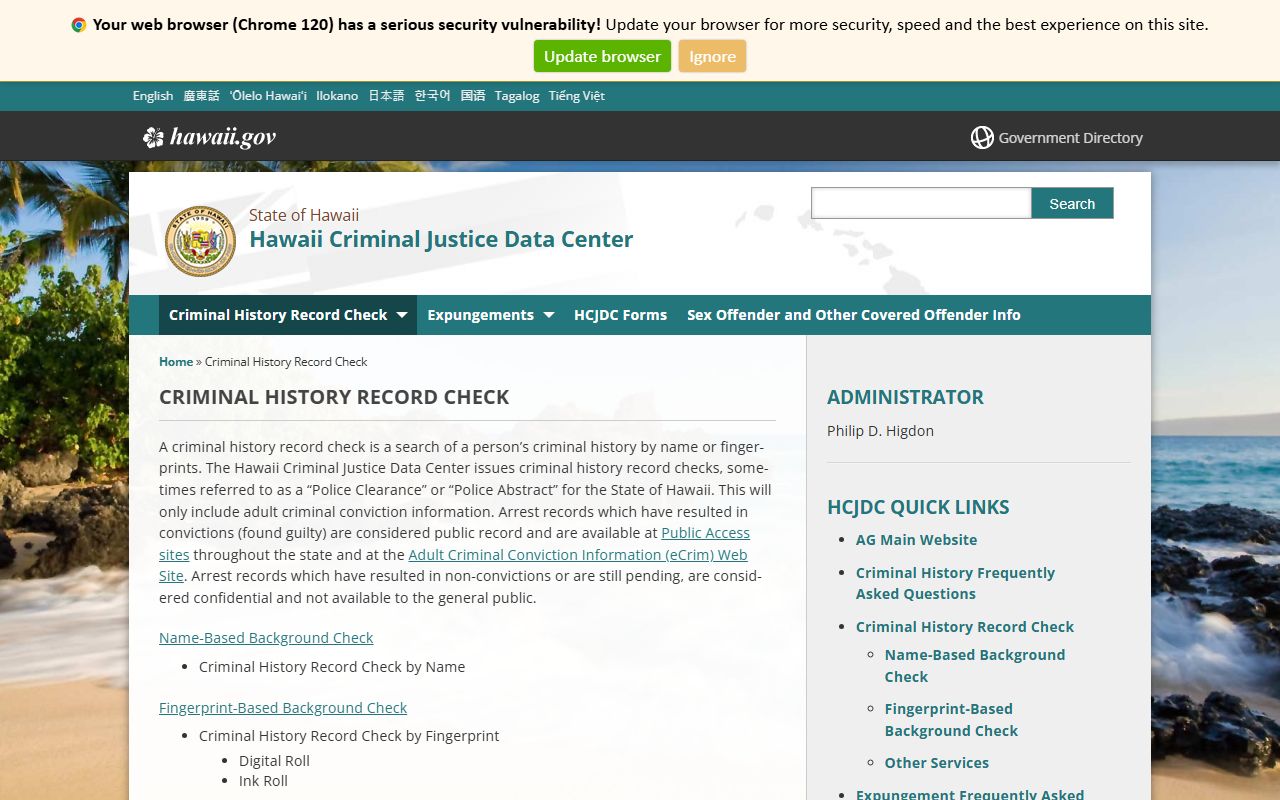
This page is the best one-stop for adult criminal history data that may touch on Hawaii bench warrants.
Hawaii Court Records Access Rules
Most court records in Hawaii are open to the public. The rule comes from state law and court rules. Basic case data on eCourt Kokua is free to view. Document downloads cost $3 for the first 30 pages and 10 cents per added page. Certified copies cost an added $2 per document. The Judiciary caps online personal identifiers such as Social Security numbers, home addresses, and phone numbers under Rule 9 of the Hawaii Court Records Rule.
Juvenile cases and sealed files are not on eCourt Kokua. Family Court civil cases filed on or after April 25, 2022 are now on eCourt Kokua as part of the JIMS upgrade. Older family cases still show up for case lookup but not for document download. Traffic abstracts are not on eCourt Kokua either; you must buy them at a district courthouse. You can read more about all of this on the University of Hawaii Law Library court records guide.
TRAVIS codes show up in older traffic records, which were moved into JIMS from the old TRAVIS system in 2005. These codes describe events, sentences, dispositions, fines, and bond data. The Judiciary kept the codes to protect the paper trail.
Tip: Call the clerk at the issuing court if you cannot find a bench warrant on eCourt Kokua. The clerk can often pull it from paper or from the full JIMS record.
Clearing a Hawaii Bench Warrant
If you think you have a bench warrant in Hawaii, do not ignore it. The warrant will stay active until police serve it or a judge recalls it. The safer path is to get a lawyer or call the clerk at the issuing court. A private defense lawyer can file a motion to quash the warrant. A public defender may help if you cannot pay for counsel.
Many courts will set a new hearing if the person shows up on their own. The judge may agree to quash the warrant after the person posts bail or signs a new set of release terms. The Hawaii Police Department on the Big Island has run sweeps that arrest people on old warrants; the press release on the November 2023 Big Island warrant sweep gives a sense of how active these operations can be.
Each county police records unit can confirm that a warrant exists. In Honolulu, the HPD phone directory at honolulupd.org lists the records line. The Records and Identification Division is at (808) 723-3258. On Hawaii Island, call the East Hawaii Records Section at (808) 961-2233. On Maui, call the Records Section at (808) 244-6400. On Kauai, call the Kauai Police Records Section at (808) 241-1929.
Visiting a station in person is a risk. Officers can arrest you on the spot if the warrant is valid. Most people call first or send a lawyer.
Browse Hawaii Bench Warrants by County
Hawaii has five counties. Pick one below to find the local police records unit, the circuit court clerk, and the ways to search bench warrants in that area.
Bench Warrants in Major Hawaii Cities
Each city below links to the police station and circuit court that handle bench warrants for that spot. Pick a city to start your lookup.